
Imagine this: it’s late January in Anchorage, the temperature has dropped to ten below, and suddenly, raw sewage starts backing up into your downstairs bathtub. It’s every Alaskan homeowner’s worst nightmare.
Unlike the Lower 48, where a failing septic system is a messy inconvenience, a failing wastewater system in Alaska can quickly turn into a frozen, catastrophic emergency. The extreme freeze-thaw cycles, unique soil compositions across the Anchorage Bowl and Eagle River, and shifting ground all put immense pressure on underground tanks and drain fields.
If you rely on a private wastewater system, catching the early signs of failure can save you thousands of dollars and a massive headache. Here are the 7 definitive warning signs that it’s time to replace your septic system—and why you shouldn’t wait until the snow flies to get it checked.
1. Sewage Backups in Your Home
Let’s start with the most obvious and urgent red flag. If you flush a toilet and sewage backs up into your bathtub, or if running the washing machine causes black water to pool in your shower drain, your system is failing.
When the septic tank is completely full or the drain field (leach field) is completely saturated and can no longer absorb wastewater, the liquid has nowhere to go but back up the pipes. While a backup can sometimes be caused by a simple localized clog, backups happening in the lowest drains of the house usually mean the entire system has reached its limit.
2. Unusually Lush, Spongy Grass Over the Drain Field
Alaskan summers are short, and getting a perfectly green lawn can be tough. But if you notice a specific patch of grass in your yard that is distinctly greener, taller, and faster-growing than the rest of the lawn, don’t celebrate your green thumb just yet.
If this lush patch is located directly over your septic tank or drain field, it’s a major warning sign. It means wastewater is leaking upward toward the surface rather than filtering down into the soil. The grass is feeding on the excess nutrients (fertilizer, essentially) from the untreated waste. If the ground feels spongy or squishy when you walk over it, a drain field replacement is likely in your near future.
3. Puddles and Standing Water (Without the Rain)
During the Alaskan spring breakup, standing water is normal as the snowpack melts. However, if it’s the middle of summer or late fall and you notice mysterious puddles forming in your yard—specifically near the septic tank—you have a problem.
When a leach field fails, it becomes clogged with biomat (a thick, slimy layer of bacteria). This prevents the soil from absorbing water. The effluent is then forced to the surface, creating foul-smelling puddles. If these puddles freeze in the winter, they create massive ice heaving issues that can destroy your yard and the remaining plumbing.
4. Persistent, Foul Odors Outdoors or Indoors
Your septic system is designed to keep toxic gases, like hydrogen sulfide, safely contained and vented properly through your roof. You should never be able to smell your septic system.
If you step out onto your back deck and catch a strong whiff of rotten eggs or raw sewage, or if you notice that same smell lingering around your indoor drains, your system is crying out for help. Odors usually precede visual evidence like puddles or backups. Escaping gases mean the tank may have a crack, the drain field is failing, or the main sewer line has collapsed.
5. Slow Draining Fixtures Throughout the House
We all deal with the occasional slow-draining bathroom sink due to hair or soap buildup. But if your kitchen sink, shower, and toilets are all draining slowly at the same time, the issue isn’t in your P-traps; it’s underground.
Slow drains indicate that the septic tank is struggling to accept new wastewater. This is often the precursor to a full sewage backup. Before you pour harsh chemical drain cleaners down your pipes (which can actually kill the beneficial bacteria in your septic tank and make the problem worse), call a professional to assess the tank levels.
6. Contaminated Well Water
Many homes in South Anchorage, the Hillside, and the Mat-Su Valley rely on both a private septic system and a private drinking water well.
If your septic system is leaking untreated waste into the surrounding soil, that effluent can eventually reach the groundwater supply. If you notice a change in the taste or smell of your tap water, or if a routine water test comes back positive for nitrates or coliform bacteria, your septic system is the most likely culprit. This is a severe health hazard that requires immediate action and coordination with local health authorities.
7. The System Has Aged Past Its Lifespan
Nothing lasts forever, especially underground infrastructure in Alaska. The typical lifespan of a conventional septic system is between 20 and 30 years.
If your home was built in the 1980s or 1990s and still has its original steel or older concrete tank, it is living on borrowed time. Steel tanks rust and collapse, while old concrete tanks can crack due to decades of frost heaves and ground shifting. If you are noticing minor issues and know your system is over 25 years old, investing in a modern, code-compliant septic replacement is a smarter financial move than throwing money at endless repairs.
Repair vs. Replace: Making the Right Call
Not sure if you need a quick fix or a total overhaul? Here is a quick breakdown:
| Situation | Likely Solution |
| Tank is over capacity but draining fine | Pump & Maintain: Needs routine pumping (every 2–3 years). |
| Baffle is broken or filter is clogged | Minor Repair: Inexpensive fix by a professional. |
| Steel tank is rusting out or collapsing | Full Replacement: Tank integrity is compromised. |
| Drain field is flooded/saturated | Drain Field Replacement: The soil can no longer process waste. |
| Home addition (adding bedrooms) | System Upgrade: Must meet MOA sizing regulations. |
Navigating Anchorage Septic Regulations
If it is time to replace your system, it’s crucial to understand that you cannot simply dig a hole and drop in a new tank. The Municipality of Anchorage (MOA) has strict regulations regarding on-site wastewater systems.
Replacing a system requires soil percolation tests, a design drafted by a registered civil engineer, and a Certificate of On-Site Systems Approval (COSA) upon completion. Furthermore, the system must meet the environmental safety standards set by the EPA Septic Guidelines. Partnering with a local contractor who understands this bureaucratic landscape is the only way to ensure your new system is legal and built to last.
FAQ Section
How long do septic systems last in Alaska?
With proper maintenance and regular pumping, a concrete or polyethylene septic tank can last 20 to 40 years. However, the drain field usually has a shorter lifespan, often requiring replacement after 15 to 25 years due to soil saturation and biomat buildup.
How much does it cost to replace a septic system in Anchorage?
Costs vary wildly depending on the soil type, lot size, and the type of system required by the municipal engineer. A standard conventional system typically ranges from $8,000 to $15,000, while complex aerobic treatment systems for difficult lots can exceed $25,000.
Can I replace my septic system in the winter?
While emergency replacements can be done in the winter, they are significantly more difficult and expensive. Excavating frozen ground (permafrost or deep frost lines) requires specialized heating equipment like ground-thawing blankets. It is always highly recommended to schedule replacements during the summer or fall.
Does homeowners insurance cover septic replacement?
Typically, standard homeowners insurance does not cover septic replacement if the failure is due to age, wear and tear, or lack of maintenance. They may cover sudden, accidental damage (like a tree falling and crushing the tank), but routine replacements are an out-of-pocket homeowner expense.
Stop Septic Disasters Before They Start
Ignoring a failing septic system won’t make it go away; it will only make it more expensive to fix. If you’ve noticed slow drains, strange odors, or mysterious yard puddles, the time to act is right now—ideally before the Alaskan winter freezes the ground solid.
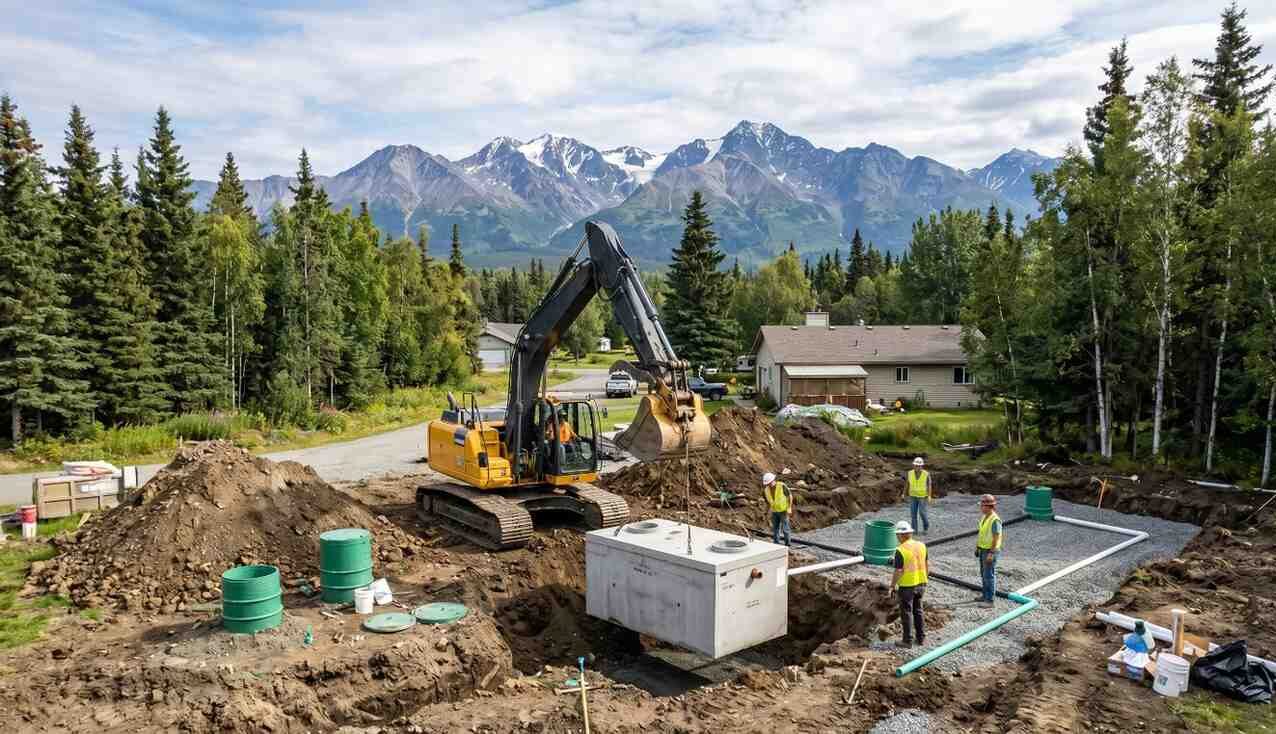
At Highmark Services, we specialize in professional, code-compliant septic solutions tailored for Alaska’s unique terrain. From safe excavation services that protect your property to full-scale septic system installations, our local experts are here to get your home’s plumbing back on track.
Don’t wait for a backup to ruin your winter. Contact us today for a site evaluation and a free quote on your septic system replacement in Anchorage.