
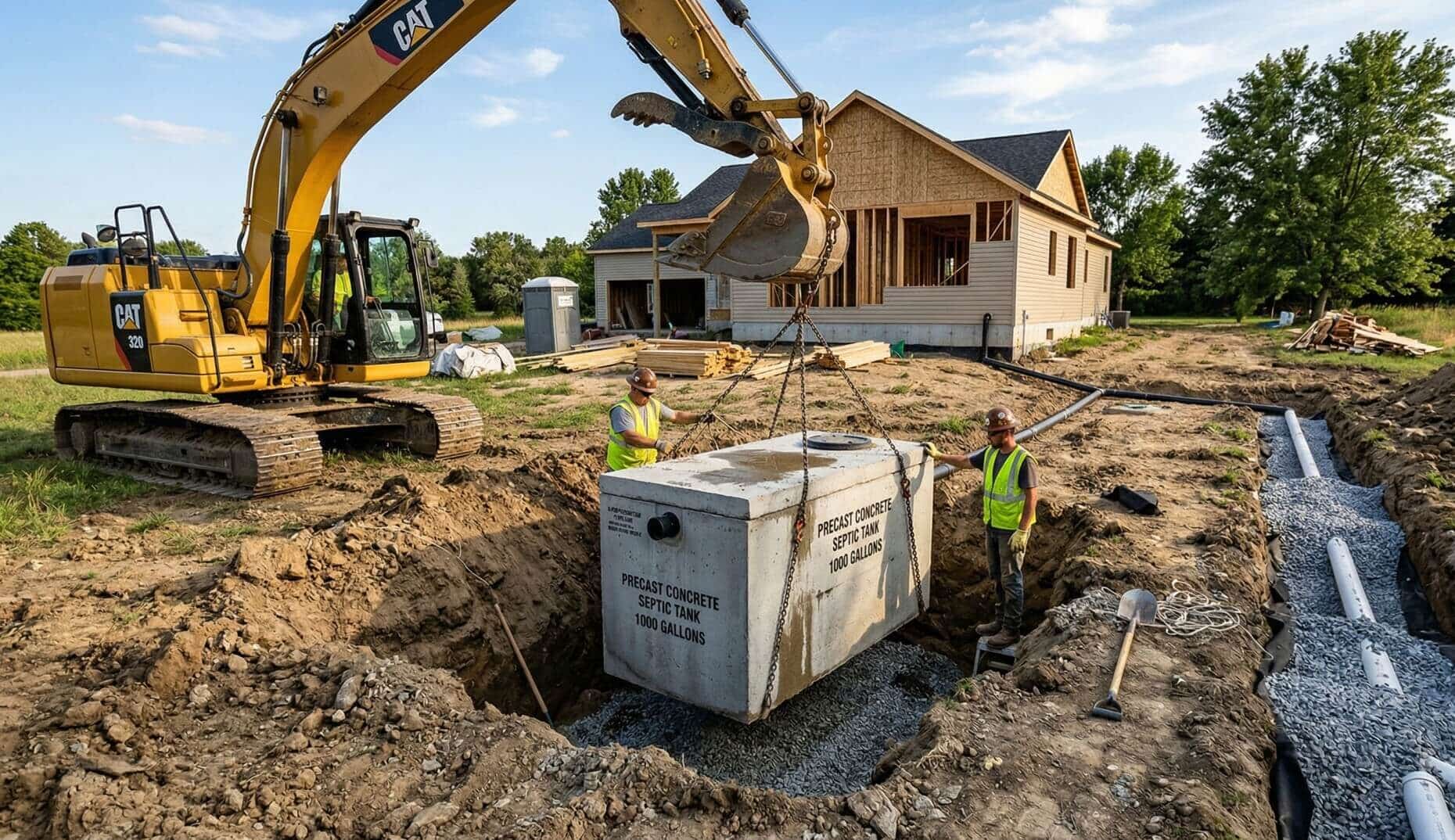
Installing a new septic system is one of the most significant investments a homeowner or property developer can make. In the Lower 48, pricing for wastewater systems is relatively standardized. However, building in Alaska introduces a unique set of variables—from permafrost and rocky soil to strict municipal regulations and cold-weather engineering requirements.
If you are building a new home, replacing a failing system, or developing a commercial lot, understanding the financial breakdown is the first step toward a successful project. So, how much does septic system installation cost in Anchorage?
Let’s break down the average estimates, the hidden factors that influence the final price, and the municipal requirements every Alaskan property owner needs to know.
The Core Estimate: What to Expect to Pay
Because every property in Anchorage is geographically and topographically unique, providing a single, flat-rate price for a septic installation is virtually impossible. However, based on industry averages and local terrain challenges, homeowners can expect to pay within the following ranges:
Conventional Septic Systems
For a standard gravity-fed system on a lot with good soil, the total cost typically ranges between $8,000 and $15,000.
Advanced Treatment Systems
For properties with difficult soil, steep slopes, or high water tables, advanced systems (such as aerobic treatment units or mound systems) are often required. These complex installations can range from $15,000 to $35,000, and in extreme commercial or highly restrictive residential cases, they can exceed $50,000.
While the upfront cost is substantial, investing in high-quality materials and experienced excavators ensures the system withstands harsh Alaskan winters and provides decades of reliable service.
Breaking Down the Costs of a Septic System
To understand why the total price tag varies so widely, it helps to look at the individual components that make up a complete septic installation project.
1. The Septic Tank
The tank itself is only a fraction of the total cost. Prices depend heavily on the material and the size of the tank, which is dictated by the number of bedrooms in the home (not the number of bathrooms).
Plastic (Polyethylene) Tanks
These are lightweight, easier to install, and highly resistant to corrosion. They typically cost between $1,500 and $3,500.
Concrete Tanks
Known for their extreme durability and longevity, concrete tanks are heavier and require specialized equipment to place. They generally range from $1,800 to $4,500.
2. The Leach Field (Drainfield)
The leach field is where the liquid effluent is dispersed into the soil for natural filtration. Constructing the leach field is often the most labor-intensive part of the project. Depending on the size of the system and the amount of imported sewer rock and sand required, leach field preparation and installation can cost anywhere from $8,000 to $12,000.
3. Engineering, Soil Testing, and Permits
In Anchorage, you cannot simply dig a hole and drop in a tank. The law requires professional oversight.
Soil Testing
Before any design begins, soil percolation (perc) tests must be conducted to determine how quickly the ground can absorb water. Soil tests can range from $1,000 to $3,000.
Civil Engineering
The Municipality of Anchorage requires a registered civil engineer to design the system. Engineering fees typically range from $1,500 to $4,000.
Permitting
Municipal permit fees generally add an additional $250 to $1,000 to the budget.
Major Cost Factors Unique to Anchorage, Alaska
Why do costs fluctuate so much from one neighborhood to the next? In Anchorage, the land dictates the price. Here are the primary factors that will influence the final quote for your property.
Soil Composition and Excavation Demands
The geography of the Anchorage Bowl, the Hillside, and Eagle River varies dramatically. If your property consists of well-draining gravel and sand, excavation will be straightforward. However, if your lot is dominated by dense clay, large glacial boulders, or permafrost, the excavation process becomes significantly more complex.
Difficult terrain requires heavy-duty machinery, extra labor hours, and sometimes the complete removal of unsuitable soil, which must then be replaced with imported, code-compliant gravel and sand. This is why partnering with a company that excels in professional excavation is critical to keeping costs managed and timelines on track.
Winterization and Freeze Prevention
Alaska’s extreme temperatures require specialized installation techniques that you won’t find in southern climates. Septic lines must be buried below the frost line, and in some cases, insulated piping or heat traces must be installed to prevent catastrophic freezing during the winter months. Incorporating these cold-weather safeguards adds to the initial material and labor costs but is entirely non-negotiable for the survival of the system.
System Type: Conventional vs. Alternative
If your soil fails a perc test or your lot is too small to accommodate a traditional wide-trench leach field, your engineer will likely mandate an alternative system. Aerobic treatment units (ATUs), which use oxygen to break down waste more efficiently before it reaches the drainfield, are common in challenging Anchorage lots. Because ATUs require electrical components, pumps, and alarms, they cost significantly more than standard gravity systems.
Navigating Anchorage Municipal Regulations
Compliance is a massive part of the septic installation process. The Municipality of Anchorage (MOA) On-Site Water and Wastewater Section strictly regulates how, where, and by whom a septic system can be installed.
- Registered Civil Engineers: As mentioned, a civil or environmental engineer registered in the State of Alaska must design and inspect the system.
- Setbacks and Separation Distances: The design must strictly adhere to municipal separation distances—meaning the tank and leach field must be specific distances away from property lines, surface water, and drinking water wells.
- Certificate of On-Site Systems Approval (COSA): If you ever plan to sell your home, municipal code requires a COSA prior to the transfer of ownership. This certificate proves that the system was legally installed, is operating safely, and meets all current codes.
Furthermore, all installations must comply with the wider regulations set forth by the Alaska Department of Environmental Conservation (ADEC). Working with a contractor who understands this bureaucratic landscape is essential to avoid costly fines or having to dig up a non-compliant system.
Choosing the Right Contractor for the Job
Because of the high costs and strict regulations involved, choosing the right team to handle your septic installation is the most important decision you will make. A minor miscalculation in the grading or a poorly compacted trench can lead to system failure, property damage, and thousands of dollars in emergency repair costs down the line.
You need a team that understands Alaskan soil, possesses the right heavy machinery, and has a proven track record of coordinating flawlessly with local engineers and municipal inspectors.
Ready to Start Your Project?
Understanding the costs associated with your specific lot doesn’t have to be a guessing game. By evaluating your property’s terrain, coordinating with top local engineers, and utilizing precision excavation techniques, the right professionals can ensure your wastewater system is built to last through the harshest Alaskan winters.
If you are planning a new build or need to replace an aging system, the team at Highmark Services is equipped to handle the heavy lifting. From initial site prep to the final code-compliant burial, we provide comprehensive solutions for property owners across the region.
Learn more about our professional Anchorage septic system installation services today, or contact us directly to discuss the specifics of your lot and request a detailed project estimate.