
When a massive winter system rolls off the Chugach Mountains and dumps a foot of snow across the Anchorage Bowl, most homeowners immediately grab their shovels to tackle the driveway. But while you are focused on clearing the ground, you might be ignoring the most vulnerable part of your home: what’s happening above your head.
Alaskan snowstorms can deposit thousands of pounds of heavy, wet snow onto your roof overnight. Combined with the constant freeze-thaw cycles we experience throughout the winter, this excess weight and melting ice can cause catastrophic structural damage, severe interior water leaks, and hidden mold growth.
Knowing how to properly assess your property after a major snowfall is a critical part of winter homeownership in Alaska. Here is a comprehensive, step-by-step guide on how to safely inspect your roof after a snowstorm—and how to know when it’s time to call in the professionals.
Safety First: Keep Your Feet on the Ground
Before we dive into what to look for, we must establish the golden rule of winter roof inspections: Do not climb onto a snowy or icy roof.
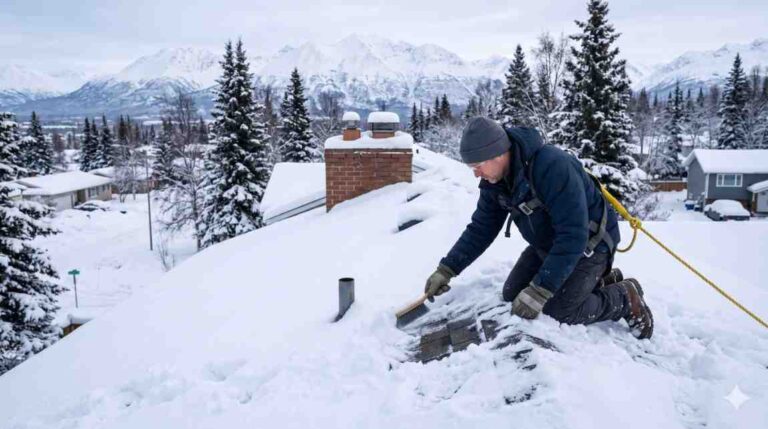
Every winter, hundreds of homeowners suffer severe injuries from slipping off icy ladders or falling from pitched roofs hidden beneath powder. You do not need to be on the roof to perform a thorough preliminary inspection. Grab a good pair of binoculars, put on your winter boots, and conduct your exterior inspection safely from the ground.
5 Critical Things to Look for After a Snowstorm
Walk the entire perimeter of your property. Using your binoculars, carefully scan the roofline, the gutters, and the surface of the roof for these five major warning signs.
1. The Formation of Ice Dams
Ice dams are the undisputed nemesis of Anchorage roofs. An ice dam forms when heat escapes from your attic, melting the snow on the upper, warmer part of the roof. This melted water runs down to the colder eaves and gutters, where it instantly refreezes.
Over a few days, this creates a solid block of ice at the edge of your roof. The real danger happens when more snow melts. The ice dam blocks the water from draining off the roof, forcing the water to back up, lift your shingles, and leak directly into your home’s walls and ceilings.
- What to look for: Thick ridges of ice building up along the edge of your roofline or gutters. Also, look for massive, heavy icicles. While a few small icicles are normal, large, thick icicles are a giant red flag that an ice dam is forming.
2. Signs of Excessive Snow Loads
Not all snow is created equal. A foot of dry, fluffy powder is relatively light, but a foot of heavy, wet “heart-attack snow” (especially common during early winter or spring storms in Anchorage) can weigh incredibly heavy. If your home is older or has a flat or low-pitch roof, structural stress is a real threat.
- What to look for: Step back and look at the ridge line of your roof. Does it look straight, or is there a visible sag in the center? Also, listen closely to your house. Popping, creaking, or cracking sounds coming from the ceiling or attic can indicate that your roof trusses are struggling under the weight.
- (For more detailed guidelines on weight limits, check out the FEMA Snow Load Safety Guide).
3. Blocked Exhaust Vents and Flues
Your home has several pipes sticking out of the roof—these are exhaust vents for your plumbing, HVAC system, water heater, and dryer. In heavy Alaskan blizzards, drifting snow can completely bury these critical vents.
- What to look for: Check if your vents are visible or buried under a snow drift. A blocked plumbing vent can cause sewer gases to back up into your home. Even worse, a blocked furnace or water heater flue can cause deadly carbon monoxide to build up inside your living space. If you suspect a blocked flue, ensure your indoor CO detectors are functioning properly and clear the vent immediately.
4. Debris Around the Perimeter of Your Home
Sometimes, the evidence of roof damage isn’t on the roof at all; it’s on the ground. High winds often accompany Anchorage snowstorms, which can rip older shingles right off the decking.
What to look for: As you walk around your yard, look at the snowbanks. Below your roofline. Do you see broken pieces of asphalt shingles, metal flashing, or torn pieces of gutter lying in the snow? If building materials have blown off, your roof is currently exposed to the elements and requires immediate attention to prevent interior water damage.
5. Interior Signs of Water Intrusion
Once you have completed your exterior walk-around, head inside. A proper post-storm roof inspection always includes a trip to the highest point inside your house.
- What to look for (Attic): Take a flashlight into your attic and inspect the underside of the roof decking. Look for dark water stains, active dripping, or frost buildup on the wood (which indicates poor attic ventilation).
- What to look for (Living Areas): Check the ceilings and top corners of your upper-floor rooms. Look for yellowish-brown water stains, bubbling paint, or peeling drywall tape. By the time water stains appear on your ceiling, a roof leak has likely been active for quite some time.
When Should You Remove the Snow?
Just because there is snow on your roof doesn’t mean you need to panic. Most modern residential roofs in Anchorage are engineered to handle the local snow loads. However, you should actively look into managing rooftop snow if:
- The snow depth exceeds 18 to 24 inches of heavy, packed snow.
- You have a flat or low-slope roof that doesn’t shed snow naturally.
- You see significant ice dams forming on the eaves.
- We are expecting a major rain-on-snow weather event (which acts like a sponge, drastically increasing the weight on your roof).
Don’t Risk It: Call the Anchorage Snow Removal Professionals
If your inspection reveals heavy snow loads, dangerous ice dams, or buried exhaust vents, it is time to take action. However, trying to shovel a pitched, icy roof yourself is incredibly dangerous. Furthermore, using sharp metal shovels or pickaxes to hack away at ice dams will almost certainly destroy your roofing shingles, voiding your warranty.
To properly protect your roof from snow, you need an experienced team equipped with specialized roof rakes, commercial-grade steam equipment for ice dams, and proper fall-arrest safety harnesses.
At Highmark Services, we know Alaskan winters. Whether you need an emergency clearing to prevent structural damage or routine residential and commercial snow removal to keep your property safe, our highly trained crews are ready to deploy.
FAQ Section
How much snow is too much for an Anchorage roof?
Most residential roofs in Anchorage built to modern building codes can support about 40 pounds per square foot. Generally, this equates to roughly 4 feet of light, dry powder or about 1.5 to 2 feet of heavy, wet, packed snow. If you are nearing 2 feet of dense snow, it’s time to consider professional removal.
What is the fastest way to get rid of an ice dam?
The safest and most effective way to remove an ice dam is using low-pressure steam. Professionals use steam to slice through the ice without damaging the fragile shingles beneath. Never use a hammer, chisel, or rock salt on your roof, as this will destroy the roofing material.
Will my homeowners insurance cover roof damage from snow?
Typically, homeowners insurance will cover internal water damage or structural collapse caused by sudden, accidental snow loads. However, they may deny a claim if the damage was caused by long-term neglect or failure to perform routine maintenance (like allowing massive ice dams to sit for months). Always review your specific policy.
Can I use a roof rake to clear the snow myself?
Yes, using a long-handled roof rake from the ground to pull snow off the lower edges of your roof is a great preventative measure against ice dams. Just be careful not to scrape the rake aggressively against the shingles, and stay far away from overhead power lines.