

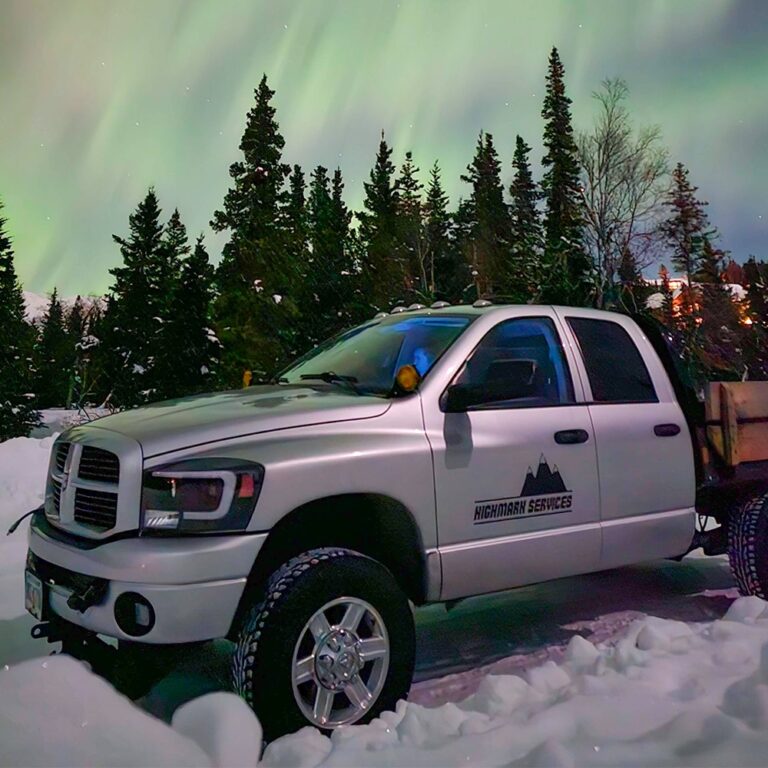
Snow is the easy part. Ice is what puts Anchorage people on the ground. A Chinook blows through in January, everything melts for two days, then the temperature drops thirty degrees overnight and every driveway in town turns into a rink. This guide covers how ice control works here, what to put down at which temperature, what’s safe for pets, and when to call in a sanding crew instead of fighting it yourself.
Why does Anchorage get so icy?
Freeze-thaw cycles. Anchorage winters aren’t steady cold. Warm Chinook winds and midwinter rain events melt the snowpack, and the water refreezes as soon as temperatures drop. Each cycle adds a layer. By February, a driveway that never got treated can carry two inches of built-up ice. South-facing surfaces melt and refreeze almost daily in late winter, which makes them the slickest spots on the property.
Is ice treatment included with snow clearing?
Sometimes, and you should never assume. Plenty of companies quote snow clearing only, then bill sanding and de-icing as extras. Highmark builds ice control into seasonal plans as a standing service, so crews treat ice on the same visit or between storms when freeze-thaw kicks in. Ask any company you’re comparing whether ice control is in the contract or billed per call. The answer changes the real cost of the quote. Our guide to snow management in Anchorage covers what a full seasonal plan includes.
What works better in Anchorage, sand or ice melt?
Sand, most of the winter. Ice melt chemicals stop working as temperatures fall, and the popular ones quit before Anchorage cold gets going. Sand doesn’t melt anything. It sits on top of the ice and gives tires and boots something to grab, and it works at 20 below the same as at 20 above. That’s why the Municipality runs sand trucks instead of salt trucks, and why sanding is the backbone of commercial ice control here. Ice melt earns its keep in the shoulder seasons and on walkways near entries, where you want bare pavement, not just traction.
| Sand | Ice Melt | |
|---|---|---|
| How it works | Traction on top of ice | Melts ice chemically |
| Cold limit | None | 0°F to 25°F depending on product |
| Pets and concrete | Safe for both | Varies, some products damage both |
| Spring aftermath | Needs sweeping at breakup | Washes away, can stress lawns |
| Best use here | Driveways, lots, deep cold | Entries and walkways, shoulder season |
At what temperature does ice melt stop working?
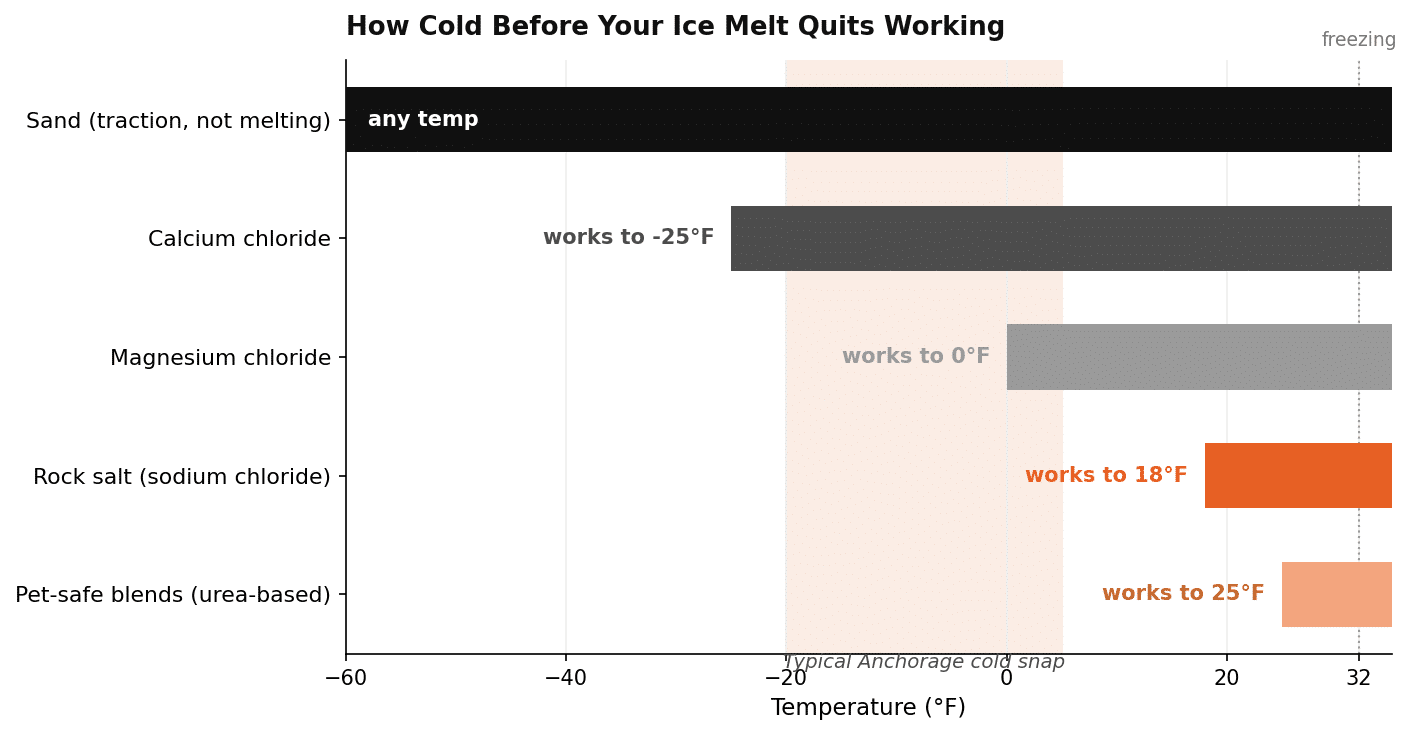
Rock salt gives up around 18°F, and it slows down well before that. Magnesium chloride holds on to about 0°F. Calcium chloride keeps melting down to roughly 25 below, which is why it costs more. The pet-safe blends built on urea quit around 25°F, barely below freezing. Check the bag before a cold snap. Spreading rock salt at 5 below does nothing except leave residue for spring.
What ice melt is safe for pets?
Urea-based and propylene glycol-based products carry the pet-safe label, and they’re the right call around entries where dogs walk. Two catches. They stop melting just below freezing, so they’re shoulder-season products here. And “safer” still isn’t “edible,” so store any of it out of reach. Plain sand is the genuinely pet-proof option, which suits Anchorage since sand is what works in deep cold anyway. If a dog is licking paws raw in midwinter, ice melt tracked in from somewhere is a common culprit.
Does ice damage driveways?
Yes, and the bill shows up in spring. Water gets into small cracks, freezes, and pries them wider, over and over, all winter. Repeated cycles turn hairline cracks into alligatored pavement and heaved slabs. Some ice melts make it worse by increasing the number of freeze-thaw cycles the surface goes through. Keeping ice off pavement all season costs less than patching it in May, and fixing the drainage problems that feed the ice does the most good of all.
When should I schedule sanding?
After every significant freeze-thaw event, and a standing arrangement beats calling each time. Seasonal clients get treated automatically when conditions turn, usually within a day of a thaw-refreeze. One-off sanding is available too, and it’s the busiest service we run during January Chinooks. Steep driveways on the Hillside and in Kempton Hills go first on the route, since grade turns a slick spot into a no-go. Pricing for sanding as an add-on or a contract line is covered in our snow removal cost guide.
Why does the same spot on my driveway ice up every year?
Drainage. Water follows the same path every melt, so the same low spot or shaded corner glaciates over and over. Downspouts that dump across pavement, low spots that pond, and shaded north-side stretches produce repeat ice all winter. Sanding treats the symptom. Summer grading fixes the cause by rebuilding the slope so meltwater runs off instead of pooling. If one section of your driveway turns into a rink every winter, that’s a grading conversation worth having in June.
What happens to all the sand in spring?
It gets swept. Breakup uncovers everything that went down between November and March, spread across driveways, sidewalks, and lawn edges. Street and lot sweeping clears it off pavement, and a spring clean-up pulls it out of the grass. Highmark runs both, which is why sand-heavy properties on our winter routes usually book spring sweeping in the same contract.
Need ice handled this winter?
Highmark Services runs sanding and ice control across South Anchorage, the Hillside, Midtown, Kempton Hills, and the surrounding 99507 neighborhoods, standalone or built into a seasonal snow plan. Reach out at highmarkservicesak.com or call 907-782-6339 before the next freeze-thaw hits.