
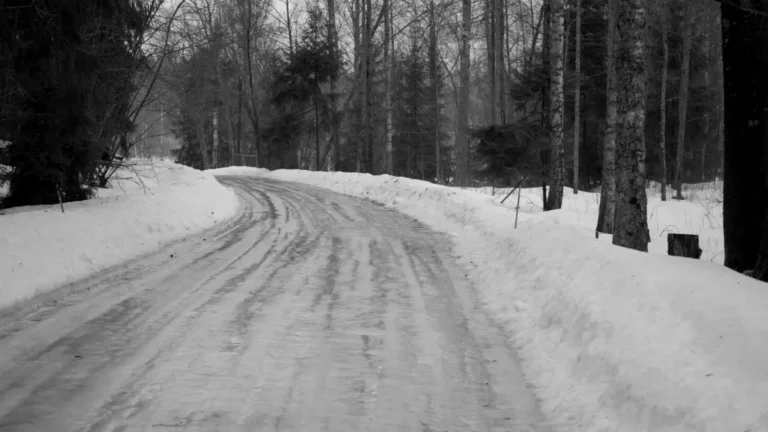
By January, a lot of Anchorage private roads and long driveways need ice rut removal more than another plow pass. They stop looking like roads and start looking like train tracks. Two deep, polished grooves where the tires run, a frozen ridge down the middle, and slick shoulders that pull your wheels sideways every time you try to steer out.
Those are ice ruts, and plowing alone won’t fix them. Once snow is packed and frozen into a rutted shape, a plow blade rides right over it. Ice rut removal takes winter road grading: cutting the packed layer back down, leveling it, and sanding the result so the surface is drivable again.
This guide explains why ice ruts form on Anchorage roads, why they’re more than an annoyance, how winter grading removes them, and how to keep them from coming back.
In Short
- Ice ruts form when snow packs down under tire traffic and freezes into grooves and ridges.
- Freeze-thaw cycles and Chinook warm spells make ruts deeper and harder.
- A standard plow blade can’t cut frozen ruts; it skims over the top.
- Winter road grading cuts down ridges, levels packed snow, restores a drivable surface, and is usually followed by sanding.
- Fall grading, a sensible trigger depth, and regular sanding are the best prevention.
What Are Ice Ruts?
Ice ruts are grooves worn into packed snow and ice by repeated tire traffic. Between and beside the grooves, the snow stays higher and freezes into hard ridges. On a busy private road, the ruts can get several inches deep by mid-winter.
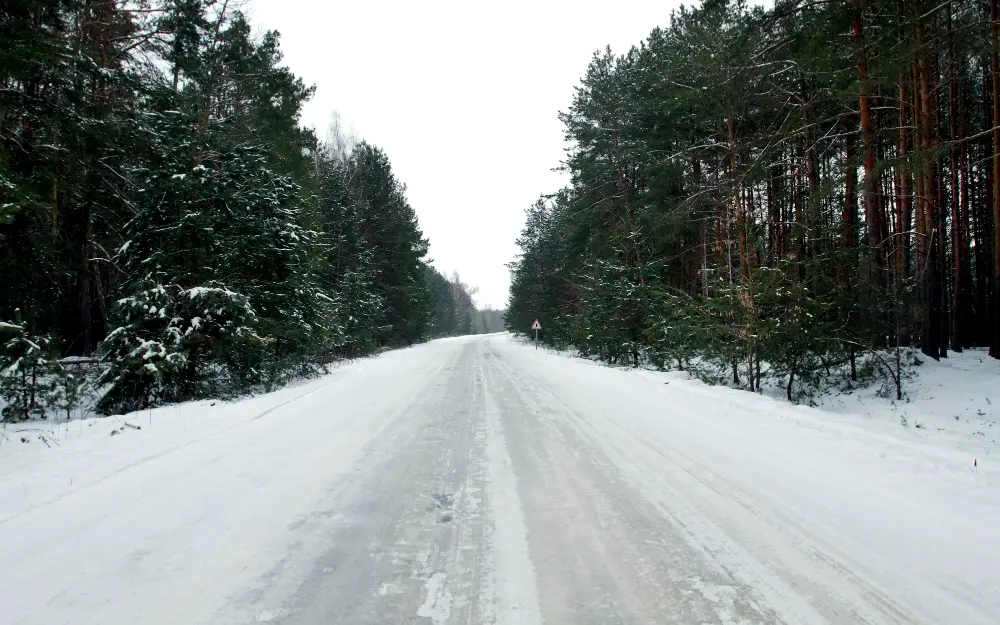
They show up most on roads and driveways that stay snow-covered all winter instead of being cleared to pavement or gravel: private roads, Hillside subdivisions, long gravel driveways, access roads, and commercial lots with steady traffic.
Why Ice Ruts Form on Anchorage Roads
Ice ruts are mostly a product of how Anchorage winters behave. Several things stack up:
Packed snow under traffic
Every time a car drives over fresh snow before it’s cleared, the snow under the tires compresses. Do that across a few storms and you get a dense layer of pack that the next plow pass can’t fully lift.
Freeze-thaw cycles
Anchorage winters aren’t steadily cold. A Chinook or rain event softens the pack, tires deepen the grooves, and a hard refreeze locks the new shape in place. Each cycle makes the ruts deeper and the ridges harder. Our guide to ice control in Anchorage explains how these cycles build ice layer by layer.
A rough surface underneath
On gravel roads, potholes and washboard force operators to run the blade higher so it doesn’t catch and tear up the gravel. A higher blade leaves more snow behind on every pass, and that leftover layer is exactly what turns into ruts. Our article on gravel driveway maintenance in Anchorage covers why the shape of the road at freeze-up matters all winter.
Snow that waits too long
The longer snow sits before it’s moved, the more traffic packs it. A trigger depth that’s too high, or a road with no plowing contract at all, gives tires more time to compact it. Our guide to snow removal trigger depth explains how that number affects packing.
Why Ice Ruts Are a Real Problem
Ruts are easy to dismiss as bumpy driving. On steep Hillside roads and long driveways, they cause real trouble.
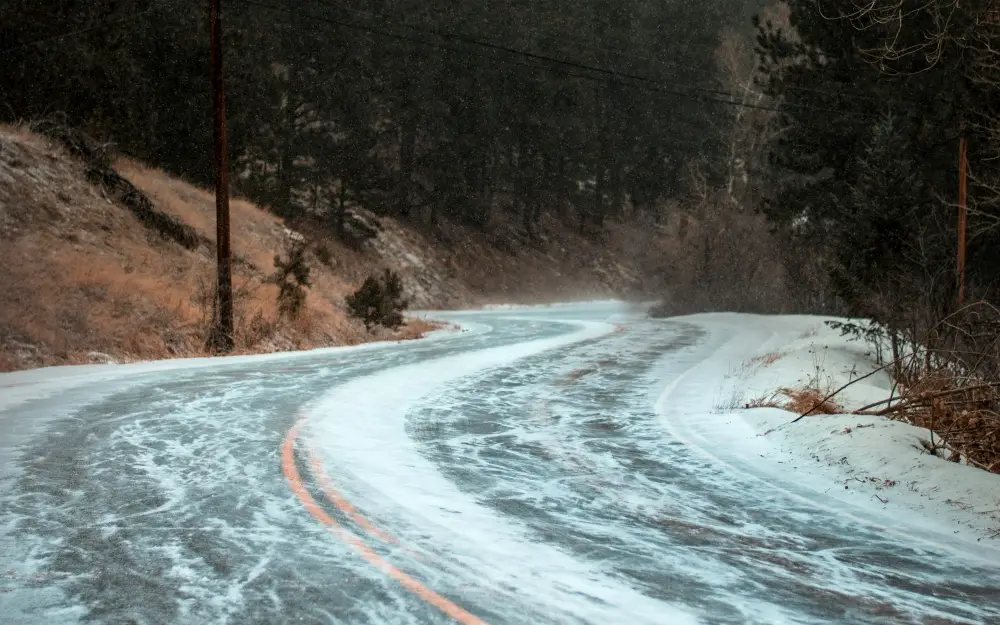
- Loss of steering control. Deep ruts grab tires and steer the vehicle. Trying to climb out of a rut on ice can send a car sideways.
- High-centering. The frozen ridge between ruts can scrape or catch low-clearance vehicles, and gets worse after a city plow leaves a berm at the road.
- Steep grades become impassable. Polished ruts on a hill are some of the slickest surfaces in town. Vehicles spin out and slide back.
- Emergency access. Ambulances, fuel trucks, and delivery vehicles need a road they can drive safely, not just a road that’s technically plowed.
- Breakup drainage problems. When the thaw comes, ruts turn into channels that carry meltwater wherever they point, often down the road and toward garages or low spots.
- Liability. On shared roads and commercial lots, rutted ice raises the risk of accidents and slip-and-fall claims. Our post on snow removal liability in Anchorage explains why documented maintenance matters.
Why a Plow Can’t Remove Ice Ruts
A plow is built to push loose snow, not to cut frozen pack. When a straight blade meets hard ruts, it rides on top of the ridges and skims off only the loose snow above them. The ruts underneath stay right where they are.
Pushing harder doesn’t help either. Forcing a blade down on frozen ruts tends to bounce it, chatter it across the surface, or gouge into the gravel or pavement beneath. Our guide to preventing snow plow damage covers how blades tear up surfaces when they catch an edge.
That’s why ice rut removal is a grading job, not a plowing job.
How Ice Rut Removal Works: Winter Road Grading
Winter grading uses heavier equipment with a blade designed to cut and reshape the surface. On a rutted road, the process usually looks like this:
- Cut down the ridges. The blade is set to shave the frozen high spots between and beside the ruts.
- Fill and level. Material cut from the ridges is pulled into the grooves so the surface comes back to a consistent level.
- Restore a drivable profile. On roads that need it, the operator shapes the pack so it doesn’t hold meltwater in the center.
- Clear the shoulders. Material pushed to the edges is moved back or off the road so the travel lanes don’t narrow.
- Sand the finished surface. Freshly cut pack is smooth and can be slick. Sanding gives tires traction right away.
The goal isn’t always to scrape all the way down to gravel or pavement. On many private roads, a level, sanded layer of hard pack is actually the safest winter surface. The goal is to remove the ruts and ridges that make it dangerous.
Highmark lists winter grading among its road grading services, for private roads, Limited Road Service Areas, driveways, and lots that need to stay level and drivable through the snow season.
When to Schedule Ice Rut Removal
Timing matters as much as equipment. These are the best times to grade:
- Right after a freeze-thaw event. Once a Chinook or rain softens the pack and it starts to refreeze, ruts deepen fast. Grading early in that window keeps them shallow.
- Before ruts get deep. Shallow ruts are quick to level. Deep ones that have frozen for weeks take more passes and more time.
- Before a forecast cold snap. Grading ahead of deep cold locks in a level surface instead of a rutted one.
- Ahead of breakup. Leveling ruts in late winter helps meltwater run off the road instead of channeling down the wheel tracks.
If you’re on a seasonal plan, ask whether winter grading is included or billed per visit. It’s one of the add-on services, along with sanding and hauling, listed on our winter services page.
Who Needs Winter Road Grading?
Ice rut removal is most valuable on properties where the road surface stays snow-covered and gets regular traffic:
| Property type | Why ruts build up | What usually helps |
|---|---|---|
| Private roads and subdivisions | Many households driving the same packed lanes | Scheduled winter grading plus sanding |
| LRSA and road association roads | Long roads, steep grades, limited budgets | Grading built into the winter scope of work |
| Long or steep driveways | Pack builds faster on grades; plows run high on gravel | Lower trigger depth, grading after thaws |
| Commercial lots and access roads | Constant traffic, early-morning use | Regular plowing, grading when pack builds |
| Shared gravel drives | No single owner keeps up with maintenance | A written agreement and a contractor who grades |
On the Anchorage Hillside, many roads are maintained by Limited Road Service Areas, whose boards hire private contractors for grading, snow removal and ice control. For private roads in particular, ice rut removal should be written into the winter contract alongside berm management and sanding. Our private road snow plowing contract guide covers what that scope should include.
DIY Ice Rut Removal: Can You Do It Yourself?
On a short, flat driveway, a homeowner with a tractor and a heavy blade can knock down shallow ruts after a thaw. Beyond that, DIY runs into limits fast.
- Light equipment can’t cut frozen pack; it rides over it like a plow does.
- Ice chippers and picks work for a few feet, not a long driveway or road.
- Chemical ice melt quits in deep cold and does little to thick pack.
- On steep grades, working on rutted ice with small equipment is genuinely risky.
For anything longer, steeper, or shared, winter grading with proper equipment is faster and safer.
How to Prevent Ice Ruts on Private Roads
The cheapest ice rut is the one that never forms. These steps make the biggest difference:
- Grade in the fall. A road that goes into winter smooth and crowned lets plows run low and clean all season. Our article on why fall is the best time for gravel driveway grading explains the timing.
- Clear snow before it packs. A sensible trigger depth means snow gets moved before traffic compacts it.
- Sand after every freeze-thaw. Traction keeps tires from spinning and polishing grooves into the pack.
- Deal with berms and storage. When shoulders fill, roads narrow and traffic concentrates into the same tracks. Berm removal and hauling keep the full width usable.
- Fix drainage. Water that pools on a road in fall and during thaws becomes ice. Grading and ditching keep it moving.
After Winter: Ruts, Breakup, and Spring Repairs
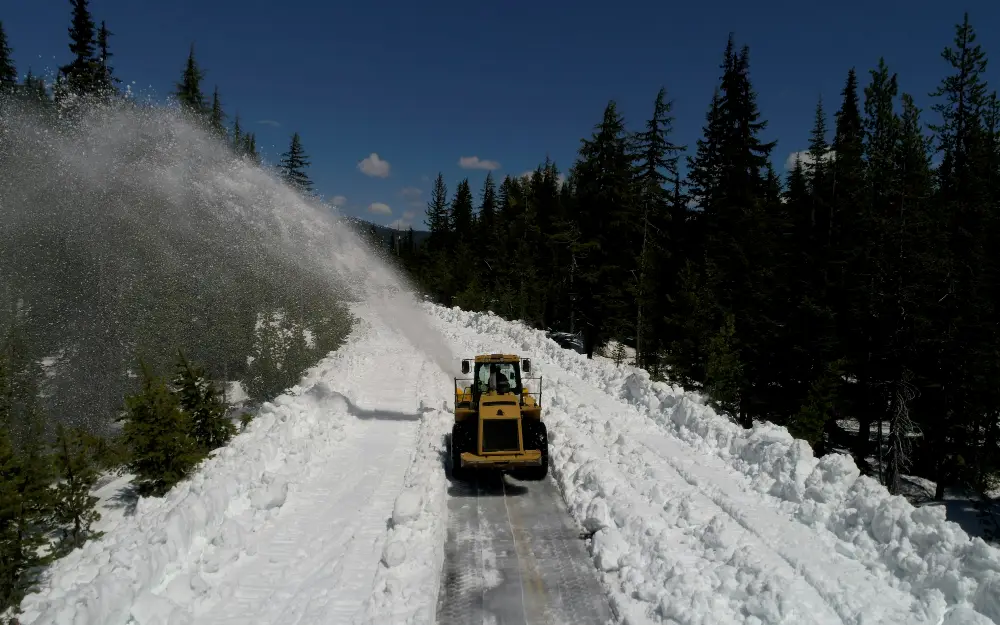
When breakup arrives, leftover ruts turn into channels and the road surface underneath often shows the damage: potholes, soft spots, and washboard. Spring street and lot sweeping clears winter sand, and a summer grade rebuilds the road before the next freeze. Keeping winter and summer grading with the same contractor means the crew knows exactly where the problem spots are.
Get Ice Rut Removal in Anchorage
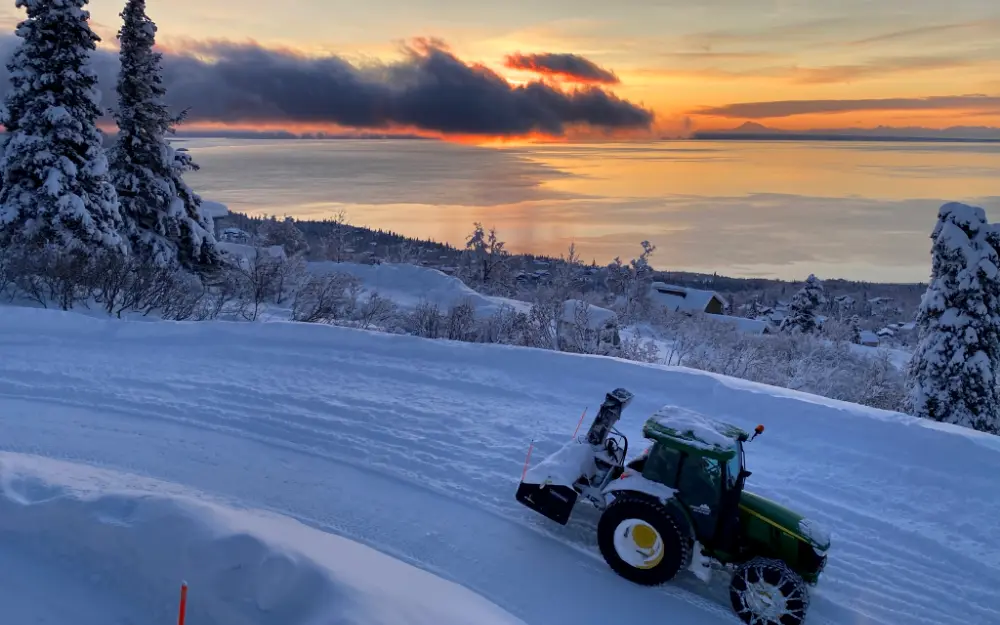
Highmark Services grades private roads, subdivision roads, long driveways, and lots across South Anchorage and the Hillside year-round. In winter that means cutting down ice ruts, leveling packed snow, and sanding steep and rutted roads, alongside plowing, berm removal, and hauling. In summer, the same crew handles corrective grading and private road maintenance.
If your road is turning into tracks, call 907-782-6339 or request a quote to get winter grading on the schedule before the next freeze.
Frequently Asked Questions
What causes ice ruts on roads and driveways?
Ice ruts form when tire traffic packs snow into grooves before it’s cleared, and freeze-thaw cycles harden that shape into ice. Rough gravel underneath and snow left too long between plow visits make them worse.
Can a snow plow remove ice ruts?
Usually not. A plow blade pushes loose snow and rides over frozen ruts. Removing them takes winter grading equipment that can cut down ridges and level the packed layer.
What is winter road grading?
Winter road grading is reshaping a snow-packed road surface during the winter. It cuts down ruts and ridges, levels the pack, clears shoulders, and is typically followed by sanding for traction.
When is the best time to remove ice ruts?
Right after a freeze-thaw event, before ruts get deep, and ahead of a forecast cold snap. Grading early in a refreeze keeps ruts shallow and easier to level.
Does winter grading damage gravel roads?
Not when it’s done correctly. Winter grading works the packed snow and ice layer, not the gravel base. Grading in fall so the road is smooth at freeze-up makes winter work cleaner.
How can I prevent ice ruts on my private road?
Grade the road in the fall, use a trigger depth that clears snow before it packs, sand after freeze-thaw cycles, and keep berms and shoulders open so traffic doesn’t concentrate into the same tracks.
Is ice rut removal included in a snow removal contract?
It depends on the contract. Many plowing contracts don’t include winter grading. Road boards and owners should ask for it by name, along with sanding and berm removal.