

Every Anchorage snow contract has one number that quietly decides how your winter goes. It isn’t the price. It’s the snow removal trigger depth, the amount of snow that has to fall before your crew is sent out without you picking up the phone.
Set it too high and you’ll be backing out over packed snow before work, wondering why nobody came. Set it too low and a per-push contract can get expensive fast. This guide explains what snow removal trigger depth means, how it works during an Anchorage storm, which depth fits which kind of property, and what it does not cover.
In Short
- Trigger depth is the snowfall amount, in inches, that sends your snow crew out automatically.
- Most residential and commercial contracts in Anchorage use a trigger somewhere between 1 and 4 inches.
- Steep driveways, low-clearance vehicles, and busy commercial lots usually need a lower trigger.
- Trigger depth doesn’t cover everything. Light snow that refreezes, city plow berms, and ice after a Chinook often need separate service.
- On a seasonal contract, a lower trigger doesn’t change your price. On a per-push contract, it means more visits on your bill.
What Is Snow Removal Trigger Depth?
Trigger depth is the accumulation threshold written into a snow removal contract. Once snowfall at your property reaches that depth, your property is added to the crew’s active route and cleared in order. Nobody has to call.
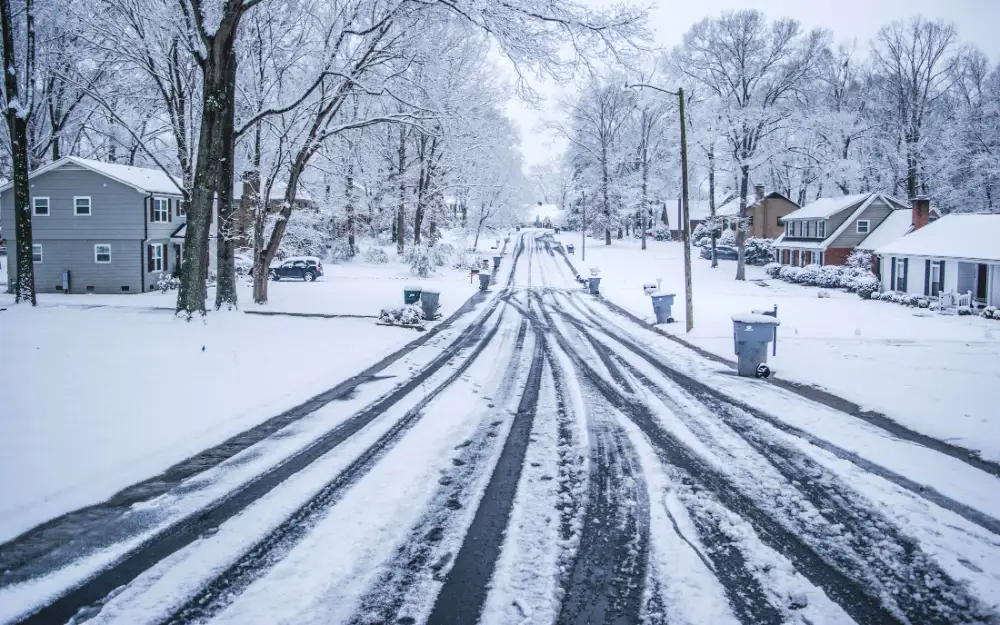
It’s the core difference between calling a plow and being on a plan. With a one-time call, you decide when you need help and then wait for an opening. With a contract, the decision is made in advance, and the crew is already watching the storm. That’s the idea behind a seasonal snow management plan, where forecast monitoring and automatic dispatch are part of the service.
How Trigger Depth Works During an Anchorage Storm
A storm doesn’t start your service the moment the first flake lands. Here is how a typical trigger-based dispatch plays out:
- The crew watches the forecast. Before the storm, the contractor plans which routes will likely trigger first.
- Snow accumulates. Crews track totals across the routes they serve.
- The trigger is reached. Once accumulation hits your contract’s depth, your property is in the queue.
- The route runs in order. Properties are cleared in a set route sequence, with priority accounts and commercial lots that open early usually first.
- Long storms may get more than one pass. If snow keeps falling, the contract should say whether the crew returns each time another trigger depth accumulates, or clears once after the storm ends.
- A cleanup pass follows. After the storm, crews return to clean up edges, approaches, and drifted areas.
That fifth step is the one homeowners most often misunderstand. “2-inch trigger” can mean clearing as soon as 2 inches fall, or clearing once the storm ends with at least 2 inches on the ground. Both are common. Make sure your contract says which one you’re getting.
Common Trigger Depths and What They Mean
There’s no single right number. The right trigger depends on your property, your vehicles, and your schedule.
| Snowfall Trigger | Service Timing | Best For | Trade-Off |
|---|---|---|---|
| 1 inch | Cleared after even light snow | Busy commercial entrances, medical offices, properties with heavy foot traffic | Most visits; costly on per-push |
| 2 inches | Cleared before snow packs down under tires | Most homes, steep Hillside driveways, low-clearance cars | Common standard; good balance |
| 3–4 inches | Cleared after moderate storms | Flat driveways, trucks and AWD vehicles, budget-focused per-push contracts | Light snow gets driven on and can pack into ice |
| 6 inches or more | Cleared only after bigger storms | Seasonal cabins, rarely used lots, overflow parking | Long gaps without service; not practical for daily use |
In Anchorage, the 2-inch range is popular for a reason. Below that, snow often isn’t worth moving. Above it, a couple of days of driving can press snow into a hard, slick layer that a blade can’t fully lift.
How to Choose the Right Trigger Depth for Your Property
Pick your trigger depth based on how your property is used, not just on price. These factors matter most:
Driveway grade
On a steep driveway, a few inches of snow can stop a car from climbing. Packed snow on a slope also turns into ice faster than on flat ground. Most Hillside properties do better with a lower trigger and sanding built into the plan.
Vehicle clearance
A truck can push through 4 inches without trouble. A low sedan may scrape or high-center well before that, especially if a city plow has also left a ridge at the bottom of the driveway.
Schedule and access needs
If someone leaves at 6 a.m. for work, or a caregiver needs to get in reliably, a lower trigger and an early route slot are worth more than a lower bill.
Foot traffic
Walkways and entries collect slip hazards faster than driveways. If walkways are part of your plan, ask whether they follow the same trigger as the driveway. Our post on walkway snow shoveling in Anchorage covers walkway-only options.
Snow type
Wet, heavy snow is harder to move and packs faster than dry powder. Properties that see a lot of wet snow often benefit from a lower trigger so the crew moves it before it compacts.
Does Trigger Depth Change What You Pay?
It depends on your contract type. On a seasonal contract, you pay one price for the winter, so a lower trigger gives you more service without changing the bill. On a per-push contract, every visit is billed, so a 1-inch trigger in a snowy winter can cost far more than a 4-inch trigger.
That’s why trigger depth and contract type should be chosen together. Our guide to snow removal costs in Anchorage breaks down how seasonal and per-visit pricing compare, and why trigger depth is one of the first questions to ask when comparing quotes.
What Trigger Depth Doesn’t Cover
A trigger depth only answers one question: how much new snow sends the crew out. Several common Anchorage winter problems fall outside that number.
- Light snow that refreezes. An inch of wet snow below your trigger can melt in the afternoon and freeze into a sheet of ice by morning. Our article on why driveways still freeze in low-snow winters explains how this happens.
- Ice after a Chinook. Freeze-thaw ice isn’t new snow, so it won’t trigger a plow visit. It needs sanding or ice treatment. See our guide to ice control in Anchorage.
- City plow berms. When the municipal plow passes, it can leave a heavy ridge across your driveway hours after your crew finished. Ask whether berm removal is part of your plan or billed separately.
- Public sidewalks. Anchorage property owners are responsible for clearing adjacent public sidewalks after a storm, whether or not your contract includes them. Our post on snow removal liability in Anchorage explains the rules.
- Running out of space. After many stacked storms, there may be nowhere left to put the snow. That’s when snow hauling comes in.
The best contracts list each of these separately so there are no surprises in January.
What If You Don’t Have a Trigger Depth at All?
Without a contract, you’re a call-in customer. After a big storm, every contractor in town is working through their contract routes first, so one-off requests wait until there’s capacity. Our post on emergency snow removal in Anchorage covers what to expect when you need help mid-storm without a plan in place.
If you have a choice, sign before the season fills. Anchorage typically sees its first measurable snow by mid-October, and routes fill around that time.
Questions to Ask Before You Sign
Use these questions to make sure your trigger depth is written clearly:
- What is the trigger depth, in inches?
- Is it measured during the storm or after it ends?
- Will the crew come back if snow keeps falling past another trigger depth?
- Is there a different trigger for walkways and entries?
- What happens with light snow below the trigger that turns to ice?
- Are sanding, berm removal, and hauling included or extra?
- Where is my property in the route order?
These fit alongside the other items covered in our guide to what a snow removal contract includes.
Trigger Depth for Commercial Lots and Private Roads
Commercial properties usually need a lower trigger and an earlier route slot, because the lot, entrances, and sidewalks need to be open before staff and customers arrive. Highmark’s commercial snow removal accounts are contracted for automatic service once snowfall reaches the depth set in the contract.
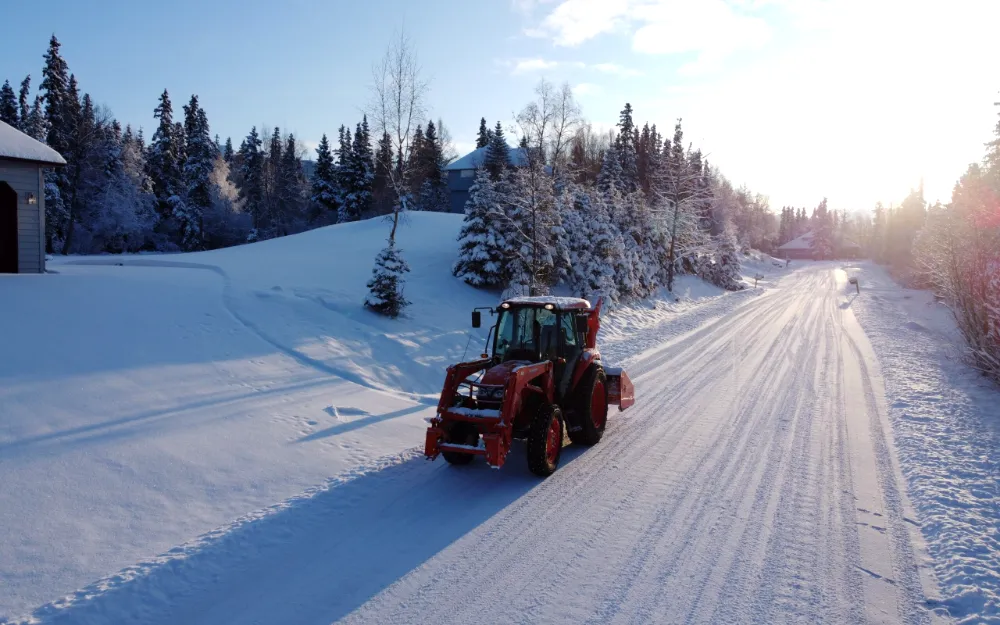
Private roads and subdivisions add another layer. Steep grades and long roads can need a lower trigger than individual driveways, plus clear rules about berms and sanding. Our private road snow plowing contract guide covers how road boards and associations should set this up.
Get the Right Trigger Depth for Your Property
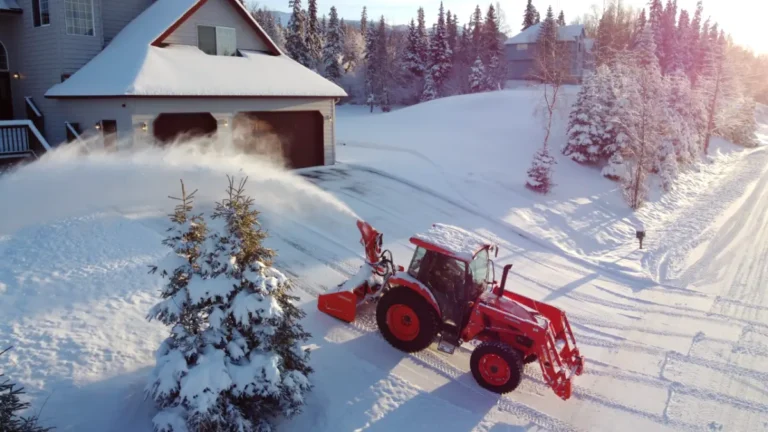
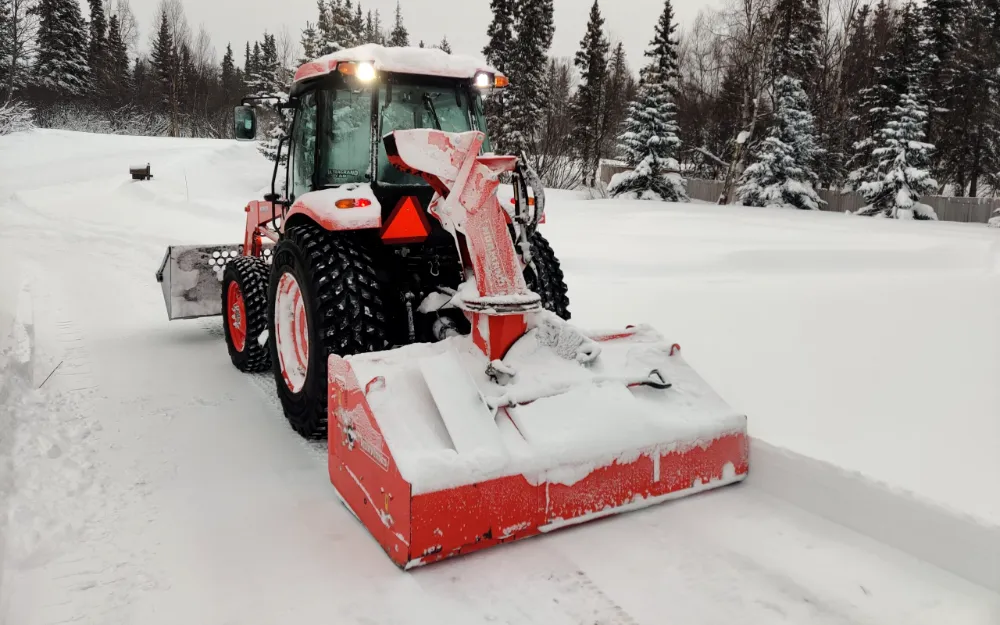
Highmark Services sets trigger depth based on your property, not a one-size-fits-all number. Residential driveways are cleared with tractor-mounted blowers that throw snow clear instead of leaving a berm, and seasonal clients are dispatched automatically when their trigger is reached. Learn more about our residential snow removal and full winter services, including sanding, berm removal, and hauling.
Call 907-782-6339 or request a quote to get on the route with a trigger depth that fits how you use your property.
Frequently Asked Questions
What does trigger depth mean in a snow removal contract?
Trigger depth is the amount of snowfall, in inches, that sends your snow removal crew out automatically. Once accumulation at your property reaches that depth, you’re cleared in route order without needing to call.
What is a normal snow removal trigger depth?
Most contracts use a trigger between 1 and 4 inches. A 2-inch trigger is a common middle ground for homes, while busy commercial entrances often use 1 inch and flat driveways with trucks may use 3 to 4 inches.
Is a lower trigger depth better?
A lower trigger means faster, more frequent clearing and less packed snow, which helps on steep driveways and busy lots. On a per-push contract it also means more visits on your bill, so balance it against your budget.
Does a lower trigger depth cost more?
Not on a seasonal contract, which covers every qualifying storm for one price. On a per-push contract, yes, because a lower trigger produces more billable visits in a snowy winter.
What happens if it snows less than the trigger depth?
The crew usually won’t be dispatched for plowing. Light snow can still melt and refreeze into ice, so ask whether your plan includes sanding or ice control for below-trigger events.
Is trigger depth measured during or after the storm?
It depends on the contract. Some crews clear as soon as the trigger is reached and return as more snow falls. Others clear once after the storm ends. Your contract should state which.
Does trigger depth include clearing the city plow berm?
Not automatically. A municipal plow can leave a berm across your driveway after your crew has finished. Check whether berm removal is included or billed separately.